Showing posts with label social entrepreneurship. Show all posts

Wednesday, February 18, 2009

An interview with Nestle Company

Greetings!

Students from Miriam College, Quezon City of the CBEA (College of Business Entrepreneurship and Accountancy) Department were given a task to interview a business/firm that is involved with social Entrepreneurship. Thank you for your kind consideration!

1. Define social entrepreneurship
A social entrepreneur is someone who recognizes a social problem and uses entrepreneurial principles to organize, create, and manage a venture to make social change.

Social entrepreneurs often work through nonprofits and citizen groups, many works in the private and governmental sectors.

The main aim of a social enterprise is to further its social and environmental goals. This need not be incompatible with making a profit - but social enterprises are often non-profits. Social enterprises are for ‘more-than-profit’.

2. What are concrete examples that make your business involved in social entrepreneurship?

The future success of our Company, Nestle is linked to the success of farmers gaining access to developed country markets and to the economic and social progress of the consuming public as a whole. As a responsible global corporation, Nestlé seeks financial returns, while also working toward social and environmental gains.

Working side-by-side, with Health Organizations, Health centers, Doctors and Red Cross societies, Nestlé staff trained youth educators, who provided information to young people; and counselors, caregivers, to provide voluntary counseling and testing and other services.

3. In your opinion, will the Philippines benefit from social entrepreneurs?

Yes, there will be business opportunities, even in a country with dysfunctional politics and political leadership, can arise if the micro-environment encourages a convergence of capital, labor, and technology in a setting of mutual trust and benefit.

4. How can you prove that social business firms’ profits are used for common good?

In social enterprises profits are used to create more jobs and businesses to use for the common good. If you are off for emotional reasons, they will do everything they can to support you.

5. What are the characteristic of a social entrepreneur?

“A social entrepreneur is any person, in any sector, who uses earned income strategies to pursue a social objective, and a social entrepreneur differs from a traditional entrepreneur in two important ways:

  • Traditional entrepreneurs frequently act in a socially responsible manner: They donate money to nonprofits; they refuse to engage in certain types of businesses; they use environmentally safe materials and practices; they treat their employees with dignity and respect. Social entrepreneurs are different because their earned income strategies are tied directly to their mission: They either employ people who are developmentally disabled, chronically mentally ill, physically challenged, poverty stricken or otherwise disadvantaged; or they sell mission-driven products and services that have a direct impact on a specific social.

  • Secondly, traditional entrepreneurs are ultimately measured by financial results: The success or failure of their companies is determined by their ability to generate profits for their owners. On the other hand, social entrepreneurs are driven by a double bottom line, a virtual blend of financial and social returns. Profitability is still a goal, but it is not the only goal, and profits are re-invested in the mission rather than being distributed to shareholders.

Distinguishing characteristics:
a. Grounded in an understanding of entrepreneurship that defines entrepreneurs as individuals who start their own businesses”
b. Focused on the generation of “earned-income” to serve a social mission
c. “Sector-bending,” blurring the lines between the business and social sectors
d. Experimentation with market-based solutions to social problems that seek to align economic and social value creation
e. Differentiates between innovation and entrepreneurship

6. Tips and advice you can give for putting up business venture that involves Social Entrepreneurship

Here are some basic ideas on some of these items that might provide you a starting point:

1. Establish CONTRACTUALLY Recurring Revenue. Develop a new “product” that complements your business and requires users to pay a monthly or annual rental, licensing, maintenance, or warranty fee. Start offering this product so you will be ahead of your competitors when sales pick up again.
2. Overcome the High Barriers to Entry. Now that you have time:
a. Do testing that qualifies you to get certain customers
b. Get a new license or certification that gives you more exclusivity
c. Add a new process that makes your product greater
d. Work on developing and patenting new intellectual property
3. Build a Great Website. These days, a website may be the first thing people see when they want to learn about your company. Make your first impression the best possible. Building an effective website takes a lot of your time to develop content, pictures, etc. So do it now if you don’t already have a great website.
4. Build a Management Team. Even though cash may be limited now, start small. With the management pool growing recently, find someone to handle more of your duties and test their capabilities and train them during this slower period.
5. Become an Expert in Your Industry. Being an expert is not as easy as knowing a lot. You have to make sure people know that you do know a lot. Writing press releases, writing blogs, calling editors and other industry leaders takes time. So why not do it now?
6. Find Simple Ways to Innovate. Get your sales people, technical people, and management together and brainstorm market needs and appropriate solutions for your customer base. Have one of your sales guys that may be low on work lead the project.
7. Diversify Your Product Mix. Integrate! Whether horizontally or vertically, why not use your existing fixed costs to increase your sales when the market picks back up or maybe even get back to your old revenue values right now with new products.

Thursday, January 29, 2009

Grameen Foundation -- Social Entrepreneurship

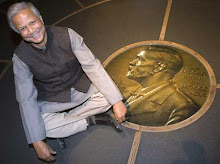
Recipient of the 2006 Nobel Peace Prize, Professor Muhammad Yunus is internationally recognized for his work in poverty alleviation and the empowerment of poor women. Professor Yunus has successfully melded capitalism with social responsibility to create the Grameen Bank, a microcredit institution committed to providing small amounts of working capital to the poor for self-employment. From its origins as an action-research project in 1976, Grameen Bank has grown to provide collateral-free loans to 7.2 million clients in nearly 80,000 villages in Bangladesh and 96% of whom are women. Over the last two decades, Grameen Bank has loaned out over 6.5 billion dollars to the poorest of the poor, while maintaining a repayment rate consistently above 98%. The innovative approach to poverty alleviation pioneered by Professor Yunus in a small village in Bangladesh has inspired a global microcredit movement reaching out to millions of poor women from rural South Africa to inner city Chicago. His autobiography, "Banker to the Poor: Microlending and the Battle Against World Poverty," has been translated in French, Italian, Spanish, English, Japanese, Portuguese, Dutch, Gujarati, Chinese, German, Turkish and Arabic.

Who we are


Mission Statement: Grameen Foundation's mission is to enable the poor, especially the poorest, to create a world without poverty.

With tiny loans, financial services and technology, we help the poor, mostly women, start self-sustaining businesses to escape poverty. Founded in 1997 by a group of friends who were inspired by the work of Grameen Bank in Bangladesh, our global network of 55 microfinance institution (MFI) partners, including our Growth Guarantee partners, has touched more than 34 million people in 24 countries. Our partners reach 6.8 million clients, and in addition, we introduced and now sustain technology initiatives (Mifos and Village Phone) in Cameroon, Kenya, Rwanda, and Uganda, bringing our total country outreach to 28.

Our team is guided by our values and our Grameen heritage, and our work is made possible by supporters who share our passion and commitment for defeating poverty through microfinance. We invite you to learn more about our work through our annual reports.

In this section:
Our People - The cadre of staff, board members and volunteers that help to nurture new ideas, innovations, and strategic thinking for fighting poverty.
Our Supporters - Individuals and organizations that share our passion and commitment for defeating global poverty through microfinance.
Annual Reports - They detail how we operate and where we work and spotlight the many people around the world we serve.
Our Grameen Heritage - The inspiration for the work we do.
Values - A compass that guides our decisions and programs
Awards and Recognition - External recognition of our work.
Partnerships - Strategic alliances that help to increase our impact.
What we do


Microfinance - a powerful poverty-fighting tool:
Microfinance helps people to escape poverty by giving them collateral-free loans and other financial services to support income-generating businesses. As each loan is repaid, the money is redistributed as loans to others, thereby mulitiplying its impact. For Fatima, a FONDEP client in Morocco, the loans have helped her build a business and new horizons for her children.


We support microfinance programs that enable the poor, mostly women, to lift themselves out of poverty and make better lives for their families. To do this, we partner with a worldwide network of microfinance institutions. Our work focuses on six key areas:

Supporting microfinance institutions

Our partner microfinance institutions (MFIs) work on the front lines daily, meeting the needs of clients and reaching out to others who can benefit from microfinance. To help them be efficient and effective and increase their outreach, we provide microfinance program support in the form of funding, technical assistance, training and new technology.

Harnessing the power of technology

Grameen Foundation's Technology Center is the leader in information and communications technology (ICT) initiatives that are dedicated exclusively to advancing microfinance. To help microfinance reach its full potential, we are driving industry-changing innovations that increase the efficiency of microfinance institutions' operations, create new microbusiness opportunities for the poor, and provide telecommunications access for the world's rural poor.

Connecting microfinance institutions with capital markets

Our Capital Management and Advisory Center is harnessing the vast resources of local and international capital markets to bring new financial resources to our microfinance institution partners. With more than 400 million poor people cut off from financial services, there is a huge, unmet need for microfinance. To reach them, MFIs need capital beyond the traditional philanthropic support to rapidly expand their operations and increase outreach.
Expanding microfinance industry knowledge

New ideas and innovative thinking will drive the expansion and effectiveness of microfinance. Knowledge sharing is an important component of our work. To have the greatest impact on global poverty, we are committed to sharing ideas and innovations with the wider microfinance community. We hope this "open-sourcing" of information will guide other organizations in improving the industry's outreach to the more than one billion people living in abject poverty.
Equipping the microfinance industry with measurement tools

A goal of Grameen Foundation’s work is to ensure our partners are moving their clients out of poverty after five years and to foster good practices for measuring the progress of individuals’ movement across poverty lines. MFIs must show results, yet many do not have the tools to evaluate how well they are fulfilling their mission of reducing poverty, reaching people excluded from financial services, empowering women, or promoting community solidarity. Grameen Foundation's Social Performance tools are designed to fill that need.

Social Business

In January 2008, Nobel Laureate Muhammad Yunus introduced a new term to the business lexicon: social business. Writing in his new book, Creating a World without Poverty, Yunus laid out the framework for two social business models and urged others to adopt them in the fight against global poverty. A social business is social-objective driven. In the first model, the company’s mission is achieved through creating or supporting sustainable "non-loss" business enterprises where all of the profits are ploughed back into the company rather than being distributed to shareholders. The second social business model is one which is profit-driven, but owned and operated entirely by the poor, who receive all company profits.


Learn more about social business on the Grameen Foundation blog.

Grameen Capital India and Grameen-Jameel Pan Arab Microfinance Limited are two social businesses that have already been launched with the support of Grameen Foundation.

Our People
To coordinate the activities of the Grameen Foundation network, we have staff based in Washington, D.C. and at the Grameen Technology Center, Seattle. Overseeing the staff is a Board of Directors. Our Grameen Foundation Advisory Council and our Board Committees and Councils nurture new ideas, innovations, strategic thinking and program development. Much of Grameen Foundation's work is done by our network of volunteers who are committed to our mission, some of whom have been working in partnership with us for more than ten years.

Where we work
Grameen Foundation works to reach the world's poorest people across four continents:
Learn more about our worldwide programs:

South Asia
East and Southeast Asia
Latin America and the Caribbean
The Arab World (Middle East and North Africa)
Sub-Saharan Africa
The United States

Wednesday, January 28, 2009

Nicholas Chan

Nicholas Chan, born November 14, 1978 is now a successful entrepreneur/venture capitalist. He is helping young people who are interested in starting up their own business. His first successful venture was when he was 17 years old. Nicholas together with his secondary classmate Benjamin Soon set up an IT Solutions company. And he was either setting up his own companies after that or joining others.

He then became a volunteer for the Project: Senso Ltd. which aspires to encourage the spirit of enterprise to the youth residents of Singapore. He was also a part of another non-profit organization called Social Creatives Ltd. Up to now he is the executive director of two companies namely, Azione Capital Pte Ltd. and Executive Publishing Pte Ltd.

“Social entrepreneurs are not content just to give a fish or teach how to fish.They will not rest until they have revolutionized the fishing industry"

quoted by: Bill Drayton, CEO, chair and founder of Ashoka
Social Entrepreneurship is applying innovative, sustainable, and practical approaches for the society’s benefits especially for the poor. Its main focus is to have a big social improvement.

Canadian Social Entrepreneurship Foundation, a sixty percent virtual organization, conceptualized in 2003 with the intentions to be more innovative and to reach out the gap between government sectors, not for profit, and businesses. For the CSEF, they can bridge the gap by being a major for in Social Entrepreneurship and by providing blended value for innovation.

JL Carvalho, the founder of CSEF says that their organization exist in order to educate, recognize, and fund existing and emerging Canadian and Global Social Entrepreneurs. CSEF invests more on Canadian social enterprises that produces revenues focusing on social inventors, children and youth, women at risk, aborginal youth ventures, environment, health, civic engagement, economic development, technology social enterprises/intellectual property based social ventures/social software (Example: efficient technology to maximize impact of social sector organizations).

Helping Hand

By: Icy Luzano

Philippine Youth Business Foundation (PYBF), is a nonprofit, non stock organization under the Prince of Wale’s Youth Business International (YBI) network. It aims to empower the next generation of entrepreneurs and eventually bridge the unemployment gap in the country.

The PYBF provides start up funds from P15,000 to P200,000 to deserving would-be entrepreneurs between the ages 18 and 30 who have clear business ideas. A mentor is then assigned to give continuing business advice to the beneficiary.

Since 2003, the PYBF has turned a total of 19 young Filipinos into businesspeople. Their businesses have in turn created a total of 56 jobs.

John Baybay, the PYBF executive director says that PYBF hopes to fill the vacuum left by banks and microfinanciers, which are unlikely to lend cash to people who have just stepped out of college.

PYBF has a panel that assesses not only how much potential beneficiary needs but also helps figure out which business plan is the most feasible. It also provides young entrepreneurs access to other business networks.

Besides creating jobs, the PYBF program also helps young entrepreneurs avoid bureaucracy and red tape usually encountered in government-run or private financing institutions. More importantly, it gives an option to young Filipinos who would otherwise leave and work abroad to earn their livelihood.

Rags in Fashion

At the nation’s rag capital, a group of priests, young professionals, and a top fashion designer collaborate on a social enterprise with a fashion statement [By Nia Terol]

If someone were to tell you that they had just come from Payatas wth an upscale fashion fund, you would likely think you had heard it all wrong. The word “Payatas,” after all, connotes images of destitute surroundings- a squalid area where impoverished families live atop mountains of garbage. It is hardly the environment you would expect for creativity and innovation, yet this is what Rags to Riches (R2R), a social development enterprise, found when it dug deeper into the Payatas situation.

Bro. Javy Alpasa, S.J., a Jesuit scholastic who ministers to the community around the Payatas dumpsite, relates that although he had seen clear evidence of pastoral growth among the Payatas folk, their economic circumstances had not been improving alongside with it. He then pondered the situation with a group of young professionals who wanted to do something to help.
Their assessment: Although Payatas had become well-known as the “rag capital of the Philippines,” the nanays [literally “mothers,” but here it means “women”] producing the rags were making only a measly P1 for each rag sold. In contrast, the retailers were making in huge profits of as much as P15 to P20 per rag.

They suggested this solution: eliminate the middlemen and add value to the merchandise so the nanays can make more money from their efforts.

With the donation of 2 students from Bro. Javy’s theology class at the Ateneo de Manila University, Rags 2 Riches was born.

The original idea of the young professionals was to create “designer rags” that could be sold to the market at a premium. They came up with so many ideas and took so many steps to make this happen, but to no avail. Eventually, however, through a series of serendipitous events, they ended up at the doorsteps of Rajo Laurel, one of Asia’s top fashion designers.

The end result of that meeting was an initial line of 11 well-designed accessory products made from rags- bags, totes, purses, and other personal items- under the “RIIR by Rajo” brand. They were to become an instant hit among the upscale, socially aware fashionista crowd.

Aside from Rajo Laurel, several other first-rate professionals volunteered their services to make the R2R product launch possible. Among them were Jake Versosa for photography, Krista Ranillo for endorsements, Maylin Vergara of the beauty salon, Propaganda for makeup and styling, popular events director Robbie Carmona, and the models from the Philippines’ Next Top Model search who graced the R2R launching event.

Part of R2R’s long-range plans is to also venture into men’s accessories and home accessories for both domestic and export markets.

Bro. Javy makes this observation abouy R2R’s social enterprise model: “It’s a win-win formula. The Payatas women earn more over time, certainly more than what they could make from time deposits or from putting up other enterprises. The adage ‘A high tide raises all boats’ rings true here.”

Indeed, the experience of R2R has shown that in social development, encouraging productive social partnerships between and across sectors is much better than espousing one-way philanthropy and charitable dole outs to the poor. This is because such productive social partnerships and to compete well with other businesses to survive and thrive.

SOURCE: ENTREPRENEUR magazine Philippines, March 2008 issue

Entrepreneur of the year - Cecilio Pedro

If there is an entrepreneur who does not have the word "loss" in his vocabulary because he believes that anything and everything can be an opportunity, it is Lamoiyan CEO Cecilio K. Pedro. Further, he has shown how an opportunity can transform into one's lifework.
In the late 1970s, Pedro’s Aluminum Containers, Inc. stood as the major supplier of aluminum collapsible toothpaste tubes to Colgate-Palmolive and the Philippine Refining Company (PRC). Aluminum Containers, Inc. enjoyed profit growth due to the increasing demand from the country’s leading toothpaste manufacturers.
However, in 1985, these companies began using plastic laminated tubes. Although this caused Pedro to close his factory, he realized his old equipment could still be put to good use. Two years later, he reopened his factory as Lamoiyan Corporation, now known as the manufacturer of toothpaste brands Hapee and Kutitap. Lamoiyan is the Cantonese name of his late grandmother – the first Christian in their family – and who remains his inspiration to this day.


Cecilio Pedro poses with the Socially Responsible Entrepreneur Of The Year award presenters Mr. Alfredo M. Velayo, Chairman Emeritus of the SGV Foundation; and Ms. Doris Magsaysay Ho, 2003 Socially Responsible Entrepreneur


With perseverance and effective advertising, and by selling his product at a price 30% lower than the leading brands, Pedro succeeded in making Hapee the No. 3 toothpaste brand in the country.
While enjoying the success of being the first Filipino to ever penetrate the toothpaste market that has been dominated by multinational companies, Pedro has chosen to use his entrepreneurial skills to help provide opportunities to others. A staunch advocate of the hearing impaired, Pedro helps provide free college education to at least 200 deaf-mute students through the Deaf Evangelistic Alliance Foundation, Inc. (DEAF), which he currently chairs. Pedro also employs over 30 deaf-mute staff in his company, and helps provide them with free housing. To narrow the communication gap between his hearing-impaired and hearing personnel, Pedro has also required his managers to learn sign language.Of these three aspects, Pedro puts a premium on creating means by which his people can grow spiritually. His company holds regular Bible studies and prayer meetings to help make food for the soul. Their singular corporate motto is “To make a difference for the Glory of God.”

The Age of Ambition

By NICHOLAS D. KRISTOF
Published: January 27, 2008

On the Ground

Nicholas Kristof addresses reader feedback and posts short takes from his travels.

With the American presidential campaign in full swing, the obvious way to change the world might seem to be through politics.

But growing numbers of young people are leaping into the fray and doing the job themselves. These are the social entrepreneurs, the 21st-century answer to the student protesters of the 1960s, and they are some of the most interesting people here at the World Economic Forum (not only because they’re half the age of everyone else).

Andrew Klaber, a 26-year-old playing hooky from Harvard Business School to come here (don’t tell his professors!), is an example of the social entrepreneur. He spent the summer after his sophomore year in college in Thailand and was aghast to see teenage girls being forced into prostitution after their parents had died of AIDS.

So he started Orphans Against AIDS (www.orphansagainstaids.org), which pays school-related expenses for hundreds of children who have been orphaned or otherwise affected by AIDS in poor countries. He and his friends volunteer their time and pay administrative costs out of their own pockets so that every penny goes to the children.

Mr. Klaber was able to expand the nonprofit organization in Africa through introductions made by Jennifer Staple, who was a year ahead of him when they were in college. When she was a sophomore, Ms. Staple founded an organization in her dorm room to collect old reading glasses in the United States and ship them to poor countries. That group, Unite for Sight, has ballooned, and last year it provided eye care to 200,000 people (www.uniteforsight.org).

In the ’60s, perhaps the most remarkable Americans were the civil rights workers and antiwar protesters who started movements that transformed the country. In the 1980s, the most fascinating people were entrepreneurs like Steve Jobs and Bill Gates, who started companies and ended up revolutionizing the way we use technology.

Today the most remarkable young people are the social entrepreneurs, those who see a problem in society and roll up their sleeves to address it in new ways. Bill Drayton, the chief executive of an organization called Ashoka that supports social entrepreneurs, likes to say that such people neither hand out fish nor teach people to fish; their aim is to revolutionize the fishing industry. If that sounds insanely ambitious, it is. John Elkington and Pamela Hartigan title their new book on social entrepreneurs “The Power of Unreasonable People.”

Universities are now offering classes in social entrepreneurship, and there are a growing number of role models. Wendy Kopp turned her thesis at Princeton into Teach for America and has had far more impact on schools than the average secretary of education.

One of the social entrepreneurs here is Soraya Salti, a 37-year-old Jordanian woman who is trying to transform the Arab world by teaching entrepreneurship in schools. Her organization, Injaz, is now training 100,000 Arab students each year to find a market niche, construct a business plan and then launch and nurture a business.

The program (www.injaz.org.jo) has spread to 12 Arab countries and is aiming to teach one million students a year. Ms. Salti argues that entrepreneurs can stimulate the economy, give young people a purpose and revitalize the Arab world. Girls in particular have flourished in the program, which has had excellent reviews and is getting support from the U.S. Agency for International Development. My hunch is that Ms. Salti will contribute more to stability and peace in the Middle East than any number of tanks in Iraq, U.N. resolutions or summit meetings.
“If you can capture the youth and change the way they think, then you can change the future,” she said.

Another young person on a mission is Ariel Zylbersztejn, a 27-year-old Mexican who founded and runs a company called Cinepop, which projects movies onto inflatable screens and shows them free in public parks. Mr. Zylbersztejn realized that 90 percent of Mexicans can’t afford to go to movies, so he started his own business model: He sells sponsorships to companies to advertise to the thousands of viewers who come to watch the free entertainment.

Mr. Zylbersztejn works with microcredit agencies and social welfare groups to engage the families that come to his movies and help them start businesses or try other strategies to overcome poverty. Cinepop is only three years old, but already 250,000 people a year watch movies on his screens — and his goal is to take the model to Brazil, India, China and other countries.

So as we follow the presidential campaign, let’s not forget that the winner isn’t the only one who will shape the world. Only one person can become president of the United States, but there’s no limit to the number of social entrepreneurs who can make this planet a better place.

Source: http://www.nytimes.com/2008/01/27/opinion/27kristof.html?_r=1